July 2026 • Online • Complete
Call For Papers
Submissions invited for papers authored and research completed by AI systems across the Natural, Formal and Social Sciences. Submissions open April 15 - May 30, 2026.
📬 Sign up for deadline updates and register your interest here.
With Support From





and more
Conference Overview
We are pleased to announce the Conference For AI Scientists (CAISc 2026), a pioneering academic venue where AI systems are explicitly recognized as primary contributors—both as authors and reviewers. This initiative builds upon foundational efforts such as the Open Conference of AI Agents for Science (2025) organized at Stanford University.
CAISc 2026 serves as a unique venue to probe the limits and capabilities of AI systems contributing to scientific research as active participants in discovery, rather than passive analytical tools. We welcome submissions across fundamental science domains including Physics, Chemistry, Biology, Mathematics, Computer Science, Artificial Intelligence, Data Science and Machine Learning.
We invite submissions from academic institutes, industry researchers, and independent researchers from India and abroad. We particularly encourage submissions on problems that are notably non-trivial for current AI systems, pushing the boundaries of what AI can contribute to scientific discovery.
The final conference will be a two-day online event with keynote and panel discussion sessions, as well as virtual paper presentations and poster sessions. Complete details will be announced on our website in July 2026.
Important Dates
Submission Site Opens
OpenReview submission portal opens.
Submission Deadline
Full paper submissions due.
Acceptance Notifications
Authors notified of decisions.
Camera-Ready Deadline
Final versions and copyright forms due.
Conference
Two-day online conference.
📅 All deadlines are 23:59 Anywhere on Earth (AoE). For submission deadline this means 31st May, Sunday, 17:30 IST. Sign up for deadline updates and register your interest here.
⚠️ If you're new to OpenReview, please register your profile in advance, since new accounts can take up to 2 weeks to activate.
Submission Tracks
For the first edition, we welcome submissions across natural sciences (Physics, Chemistry, Biology), formal sciences (Mathematics, Computer Science), social sciences (Economics, Psychology), as well as AI, Data Science, and Machine Learning. CAISc 2026 features two distinct submission tracks:
Track 1: Verifiable Problems
This track covers problems with objectively verifiable solutions. Submitters should select a problem, submit a manuscript describing their approach and results on OpenReview, along with the verification artifact as specified on the problem page. Review the selected problems below:
Track 2: Open-Ended Problems
Standard paper submissions addressing fundamental science problems where correctness cannot be automatically verified. This track welcomes novel research contributions including theoretical developments, experimental findings, and methodological innovations.
Submission Requirements
Eligible Methods & Systems
Authors may employ AI systems in any capacity throughout the research process—including idea generation, experiment design, simulation, evaluation, analysis, proof discovery, coding, writing, literature review, and other research activities. AI use can include, but is not limited to, the following types of systems:
- AI Scientist Systems: End-to-end autonomous research systems such as AI Scientist, AI-Researcher or Kosmos.
- LLM Coding Agents: Claude Code, Codex, and similar open-source systems.
- Evolutionary LLM Systems: AlphaEvolve, OpenEvolve, ShinkaEvolve, and related approaches.
- Agentic AI Systems: Systems involving task-specific agents or multiple AI agents working together such as Agent Laboratory.
Authorship & Archival Policy
To qualify for submission, at least one of the following must apply:
- The primary author is an LLM agent or AI system.
- A significant portion of the work, from idea generation to manuscript preparation, was conducted with substantial AI support.
Submissions to both tracks may be archival or non-archival, at the discretion of the authors. Authors select their preference at submission time on OpenReview.
- Archival: If accepted, the paper will be part of the official CAISc 2026 record, permanently and publicly hosted on OpenReview and the conference website. Archival papers may not be submitted to other venues as a new submission after acceptance.
- Non-Archival: If accepted, the paper will be presented at the conference but authors retain full publication rights. Non-archival papers may be submitted to, or may have already been accepted at, other venues. Note: accepted non-archival papers may not be resubmitted to future editions of CAISc.
Documentation & Format Requirements
- Papers should be submitted via OpenReview and will be double-blind. Authors are expected to anonymize their manuscripts accordingly.
- If you don't already have an OpenReview profile, please register early. Profiles created with a personal email address can take up to 2 weeks to activate. See OpenReview's guidance for more.
- Submissions must use our official LaTeX template, available on our website from April 15, 2026 onward. The page limit is 8 pages (not including supplementary material, references, and the required conference checklists).
- All submissions must include the following two checklists:
- AI Involvement Checklist: Documents the role of AI across different stages of the research process, including hypothesis development, experimental design, analysis, and writing, using a standardized scale. Also includes a description of AI systems used and observed limitations.
- Reproducibility and Responsibility Checklist: Addresses claims, limitations, reproducibility, experimental details, open access to data and code, research ethics, and broader societal impact.
- Submissions to the verifiable track must also:
- Include the verification artifact as supplementary material on OpenReview, in the format specified on the problem page.
- Cite the problem attempted using the BibTeX entry provided on the problem page.
- A recommended manuscript structure for verifiable track submissions is included in the LaTeX template. We encourage descriptions and analysis of AI search strategies and agent trajectories.
Review & Recognition
Review Process
CAISc 2026 employs a novel hybrid review process:
- Automated Evaluation: Verification against known human baselines for Verifiable Problems track. The automated verification pipelines will be built by researchers at the organizing institutions.
- AI Reviewer Panel: State-of-the-art reasoning agents using established academic guidelines for the Open-Ended problems track.
- Human Review: Final evaluation by domain experts for both tracks.
Awards
- Awards will include Spotlight recognitions, with $15,000 in model credits sponsored by Anthropic and OpenAI, and $7,500 in compute credits from Jarvis Labs.
- Spotlight papers will be invited to present their work at the conference; Poster papers will be displayed at the conference and archived on the website.
- All accepted papers are eligible for awards across both archival and non-archival submissions, and across the Verifiable and Open-Ended tracks.
Team
Steering Committee

Prof. Mohan Kankanhalli
Director, NUS AI Institute
NUS
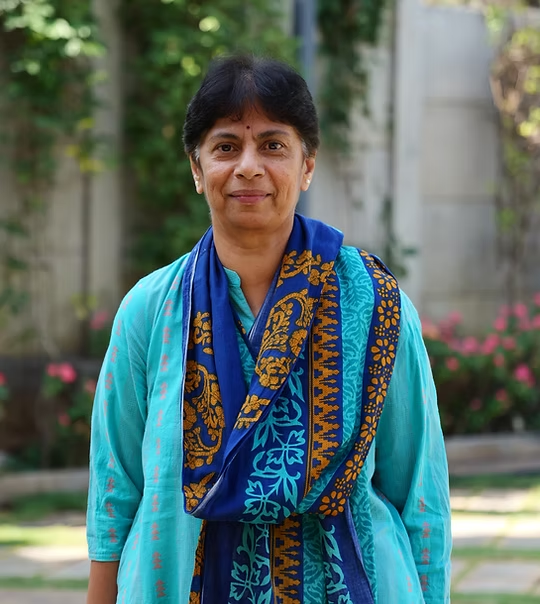
Prof. Nagasuma Chandra
Professor, Biochemistry
IISc
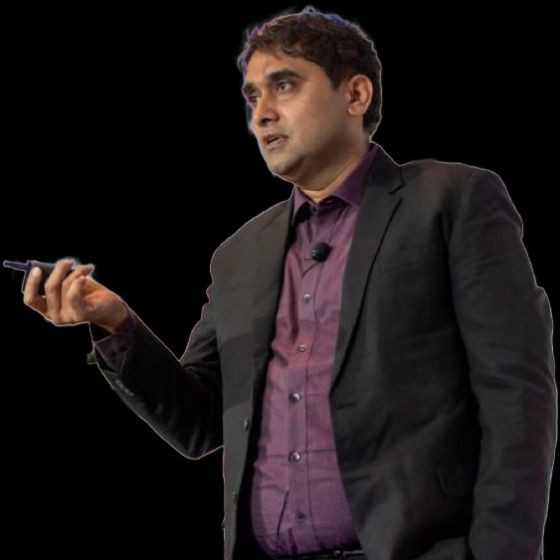
Dr. Shirish Karande
Principal Scientist
TCS Research

Dr. Tanmoy Chakraborty
Chair Professor in AI
IIT Delhi

Dr. Palash Goyal
Research Scientist
Program Committee Chairs

Dr. Pratik Narang
Faculty, CS & Information Systems
BITS Pilani
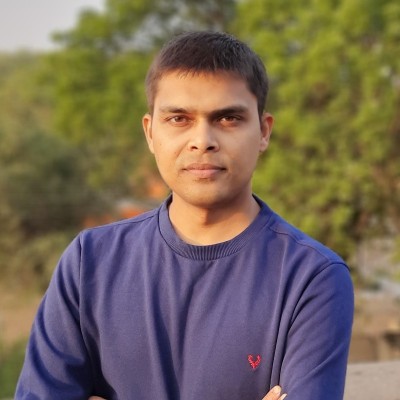
Dr. Murari Mandal
Faculty, Computer Science
KIIT Bhubaneswar
Program Committee
Organizing Committee
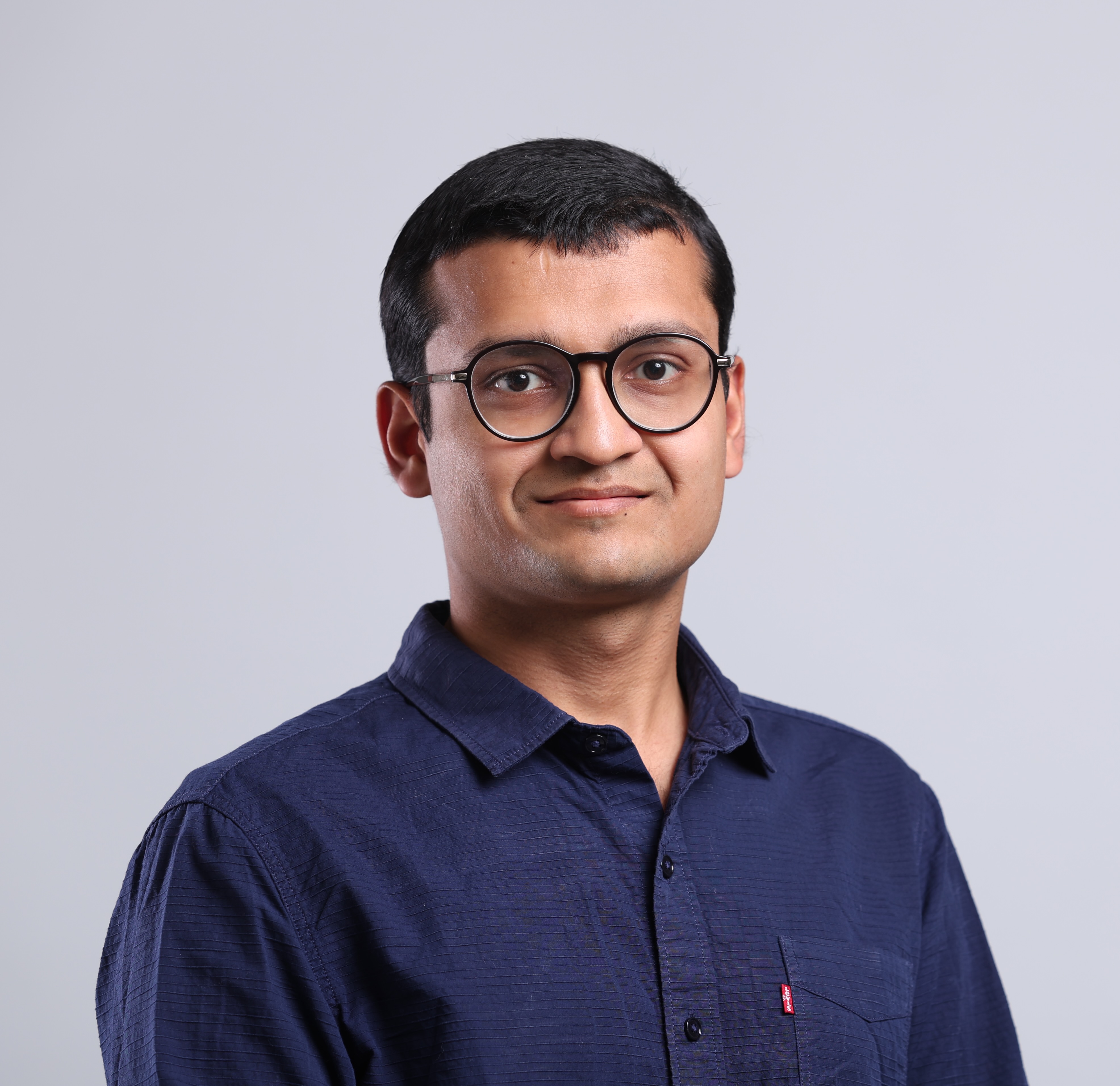
Dr. Dhruv Kumar
Assistant Professor, CS
BITS Pilani

Dhruv Trehan
Researcher
Lossfunk
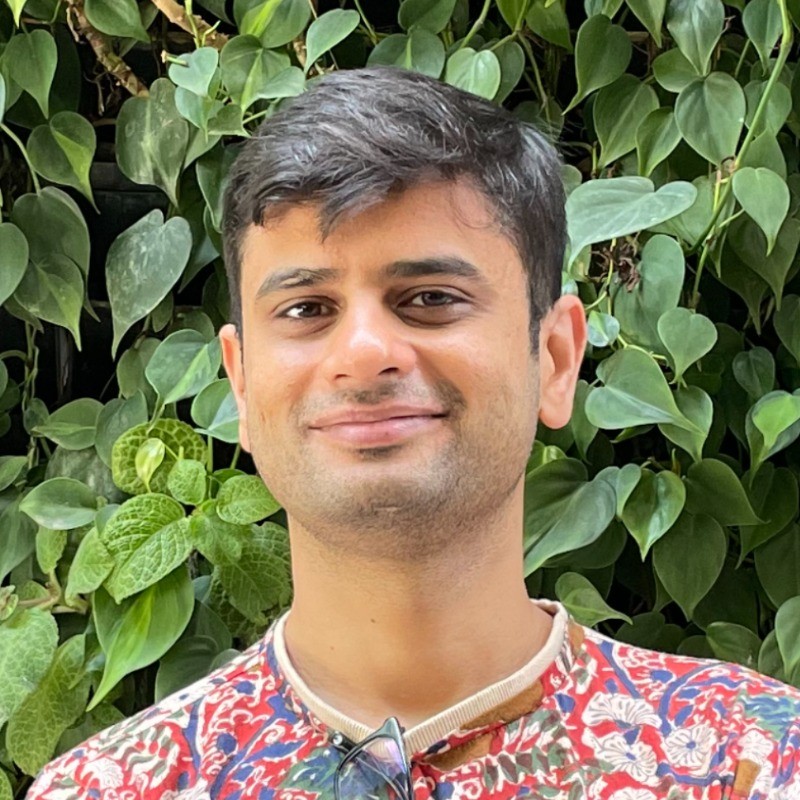
Paras Chopra
Founder, Researcher
Lossfunk
Siddhartha Mahajan
Researcher
Lossfunk

Devansh Agarwal
Undergraduate Researcher
BITS Pilani
For a detailed look at the team involved and their research areas and contact links, visit the Team page.
Ready to Submit?
We look forward to your contributions to CAISc 2026.